
I saw this question a few times, and usually people don't specify which TYPE/LEVEL of multi-tenancy they mean. So, a post explaining the 3 LEVELS of multi-tenancy.
So, is Laravel 13 the same as multi-tenancy? The short answer is NO.
It's the foundation for team/user behavior, and then you can build multi-tenancy ON TOP of teams, scoping Models with one of three levels of multi-tenancy.
Level 1: Application-Level
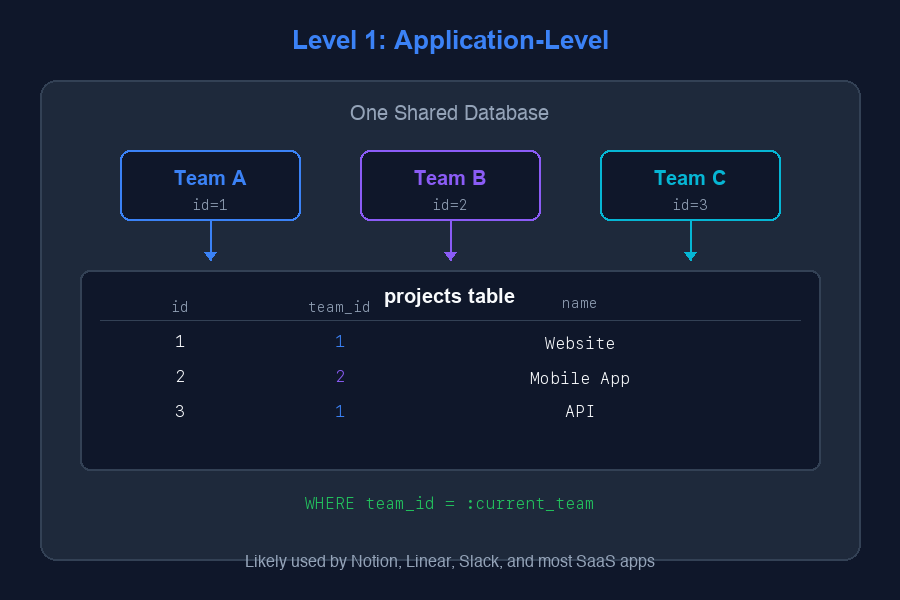
Shared DB, shared tables, team_id on every row.
Isolation = query scoping.
This is what (likely/probably) Notion, Linear, and Slack do. This is what 90% of SaaS apps need.
Level 2: Database-Level
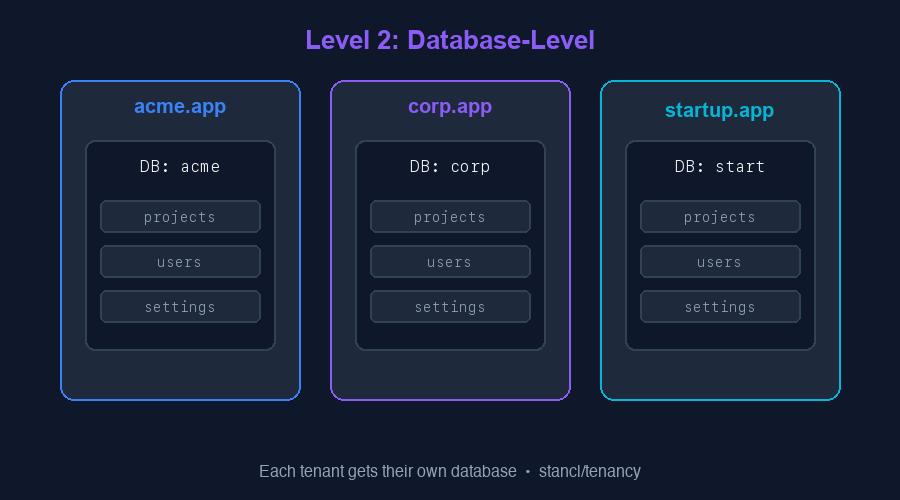
Each tenant gets their own database. Isolation = separate DB connections.
Use when: compliance requirements, per-tenant backups, or you need subdomain routing.
Packages like stancl/tenancy handle this in Laravel.
Level 3: Infrastructure-Level
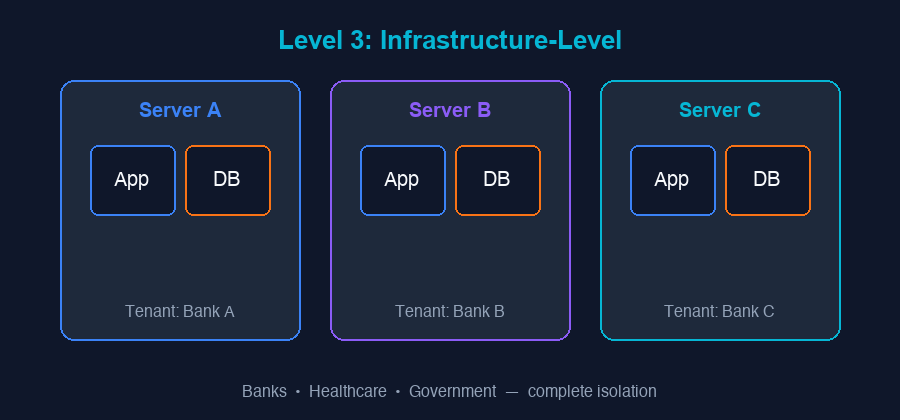
Each tenant gets their own server/deployment. Isolation = completely separate environments.
Use when: banks, healthcare, government — where even sharing a server is not acceptable.
The Tradeoff
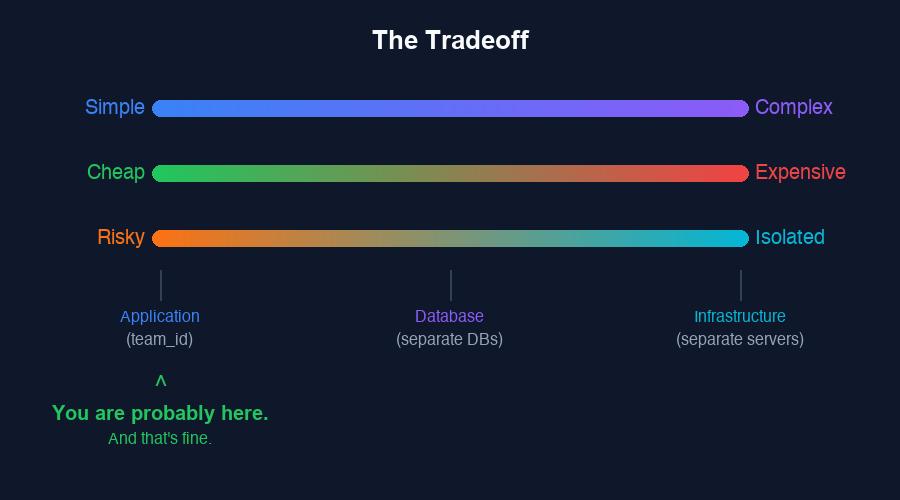
So, with Laravel 13 Teams, you can easily build the "Level 1" multi-tenancy of application-level, scoping Eloquent queries by team_id.
And it's the right tool for most SaaS apps.
Don't architect for the bank compliance you may never have. Start with team_id, add global scopes, and ship.
No comments yet…